Service
IoT Solutions
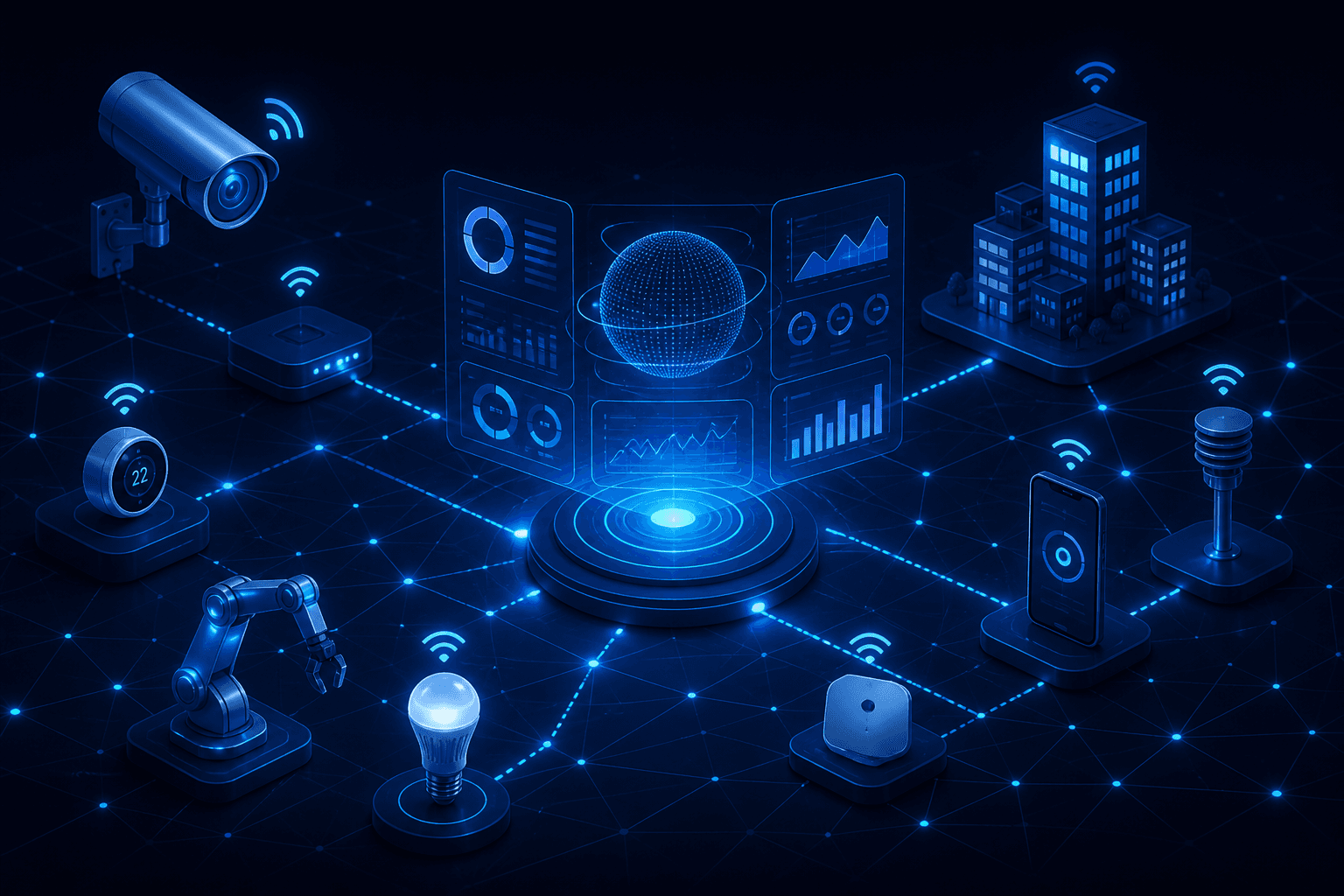
From device integration to the dashboard operators trust. We turn connected hardware into one system somebody can actually monitor.
What this is
We build the software around connected devices, not the circuit board. If you've got firmware, a gateway, or a hardware partner, we connect it to a backend that ingests telemetry, knows which device is which, pushes commands, and shows operators what's going on. What you end up with is a monitored system, not a chart that stops updating when someone's laptop sleeps.
Hardware integration means speaking whatever protocol you already have, whether that's MQTT, HTTP, BLE through a gateway, or a vendor SDK. It also means mapping device identity to a tenant and handling the ugly parts. Clock drift, retries, partial payloads, and units that go quiet for a week. We don't assume every sensor is online all the time.
Dashboards get built for the job in front of the operator. Exception lists, device health, and the two or three time series that actually change a decision. Forty gauges nobody looks at is worse than five that matter. Alerts go to whoever can act on them, with the device, site, last value, and last-seen time attached, instead of a raw topic dump.
Who it is for
- Hardware teams who can ship devices but not the cloud product customers log into.
- Operators who need fleet visibility in one place: online status, last seen, firmware version, alerts.
- Companies turning a one-off installation into something they can sell to fifty more sites.
- Product teams who need device data sitting in the same app as billing, roles, and support.
The problem
A device you can't see, command, or trust in software is just hardware sitting in a field. We usually find firmware on one side and a spreadsheet on the other. What's missing between them is the software layer: ingest, device identity, commands, alerts, and a dashboard an operator can use without plugging in a serial cable.
What we build
Device ingest and identity
Ingest pipelines, a device registry, and credentials per unit. Every device belongs to a tenant or a site. Provisioning becomes a real process instead of a shared password in a wiki.
Telemetry, commands, and state
Time-series or event storage for whatever the device reports, plus a command path with acknowledgements. We model devices that are offline rather than assuming a socket stays open forever.
Operator dashboards and alerts
Health views, exception lists, and the screens your field techs and ops team will actually use. Thresholds are configurable, so tuning an alert doesn't need a deploy.
Product layer on top of the fleet
Customer logins and roles, and when you're selling this as software, the same tenancy and billing patterns we use for SaaS. The difference is that the fleet is the central object.
Process
- 01
Inventory the hardware path
Protocol, payload shape, who owns the firmware, and how a device gets identified once it's in the field. We write that contract down before anyone sketches a dashboard.
- 02
Stand up ingest and registry
A working path from device or gateway into storage you can query, plus a registry that knows which customer owns which unit. We prove it against real hardware rather than a simulator.
- 03
Operator product
The screens and alerts for the people who'll be in this system all day. We watch them use a staging fleet, then cut every chart that doesn't change a decision.
- 04
Harden for the field
Retries, backfill, access control, and a runbook for units that go dark. Then the dashboards, APIs, and cloud accounts get handed over in your name.
Deliverables
- Device registry, ingest pipeline, and a command channel if it's in scope
- An operator dashboard for health, telemetry, and exceptions
- Alerting with thresholds your team can change
- APIs so your other products can read device state
- A runbook for provisioning, offline devices, and access
FAQ
No. We integrate with the hardware and firmware you have, or with a partner you bring in. Our side is the software: connectivity, data, commands, and the product operators use. If the firmware needs a change to give us a stable contract we'll specify exactly what, but we won't become your electrical engineering team.
MQTT and HTTPS handle most paths from a gateway or device into the cloud. We've also wrapped vendor SDKs and BLE-through-gateway setups when that's what was already installed. We work from what your devices speak today.
Yes. AWS is our default for this kind of ingest, queueing, and device credentialing. The accounts, keys, and data stay in your organization. You won't get locked into a hosted box you can't walk away from.
Last-seen timestamps, an expected reporting interval, and a status that tells the truth instead of a green dot that lies. Telemetry backfills on reconnect when the firmware buffers it. Alerts fire on silence, not only on a bad reading.
Yes, and it's a requirement we design for from the start. Tenancy and roles get built alongside the registry, so one customer never sees another company's fleet.
Get in touch
Discuss this service
One 30-minute call. We'll talk through the build, the timeline, and whether it's a fit - no deck, no pressure.
No commitment. Free 30-min scoping call. Or see our work